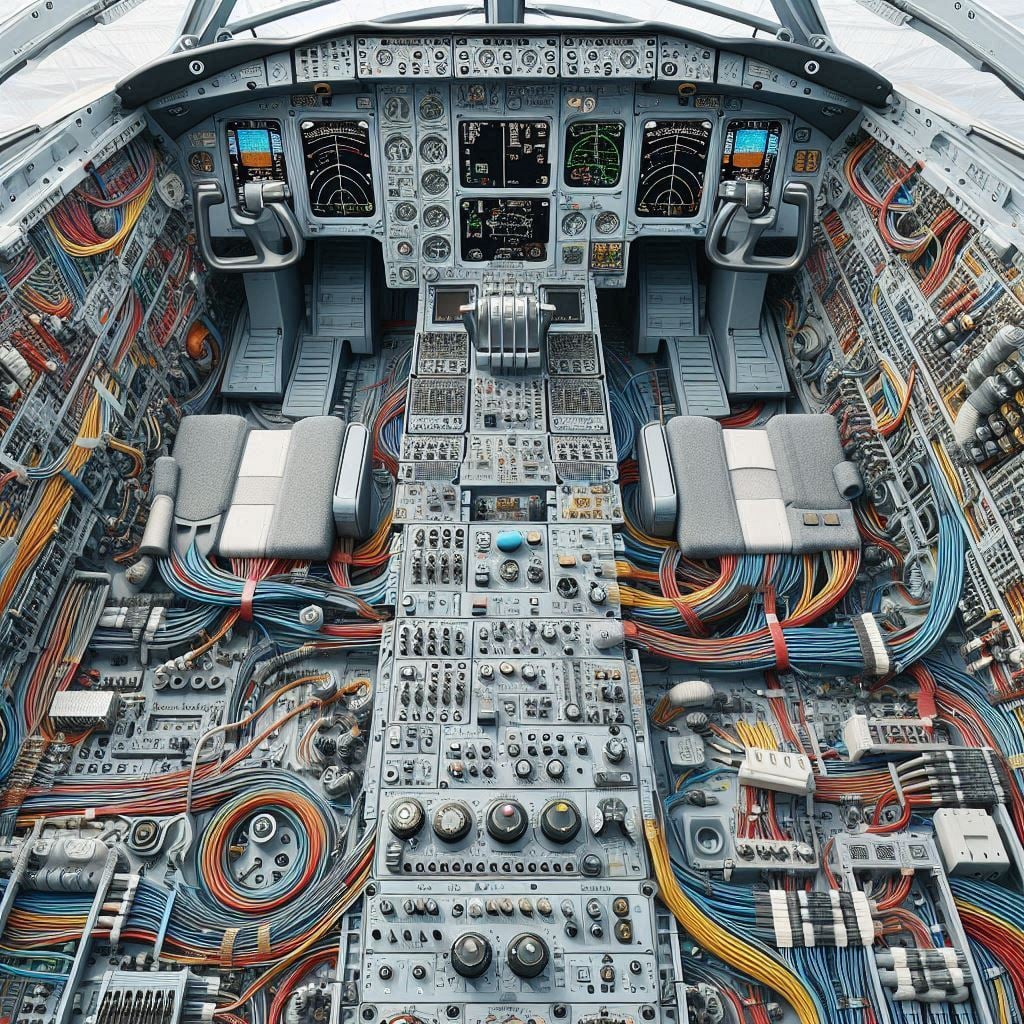
AS50881 is not a manual you read once and shelve. For aerospace operations managers responsible for wiring interconnect systems, AS50881 compliance and EWIS governance determine whether a quote becomes a deliverable or an audit exception that costs time, money, and reputation. This piece gives clear, operational steps for wiring harness compliance, explains key terms and regulations, shows where failures usually happen, and offers a practical 12-item checklist you can apply today to tighten traceability, speed quoting, and reduce nonconformances. Along the way I point to standards and industry resources so you can validate every claim.
Table Of Contents
Quick Primer: What AS50881 Requires
Why EWIS Matters To Harness Manufacturers
Common Failure Modes That Slow Quotes And Raise Risk
12 Practical Compliance Tips For Operations Managers
How Quoting And Compliance Intersect, Process Changes That Save Time
Why Automation Matters, And How Tools Can Help
Quick Audit Checklist (Download-Ready)
Next Steps And Pilot Suggestions
Following the checklist will help you build repeatable, audit-ready workflows that reduce engineering rework, shorten quote cycles, and prevent delivery delays caused by missing certifications or incorrect parts. It is important because AS50881 is a baseline requirement for EWIS safety and traceability in aerospace. A single missing certificate of conformity can stop an aircraft delivery, trigger rework, and lead to costly corrective actions. This checklist turns vague compliance goals into measurable actions, so audits become routine and not disruptive.
Quick Primer: What AS50881 Requires
AS50881 is the SAE guidance for wiring and wiring devices used in aerospace vehicles. It covers selection, installation, protection, identification, and documentation of electrical wiring interconnect systems. For an authoritative industry reference see the SAE standard summary at SAE AS50881 standard summary and the accessible version of the standard at SAE AS50881 full text (PDF). Key obligations contract manufacturers face include accurate BOMs, traceability to MPNs and lot information, correct wire and insulation selection, routing and support that prevent chafing, and inspection records for continuity and hi-pot testing.
Why EWIS Matters To Harness Manufacturers
EWIS, short for electrical wiring interconnect system, is not a checkbox. It is the assembly of wires, terminals, connectors, and protective hardware that must work in severe vibration, temperature, and electromagnetic environments. Poor wiring practices have caused in-service failures and prompted stricter OEM and regulatory scrutiny. Technical authorities emphasize that EWIS considerations must begin in design and continue through manufacturing and maintenance; for discussions on design-stage obligations see technical commentary at Lectromec on AS50881 considerations. For contract manufacturers, that means shop-level choices about parts, routing, and documentation are traceable back to AS50881 expectations.
Common Failure Modes That Slow Quotes And Raise Risk
Unstructured documents, missing parts data, and ambiguous text descriptions are the usual culprits. Typical failure modes include:
OEM PDFs that require hours of manual BOM recreation, which increases cost and invites typos.
Ambiguous part descriptions such as "black tape" or "connector, 6-pin," which hide critical attributes.
Missing approved alternates, which creates supply chain delays when a preferred supplier is out of stock.
Underestimated wire lengths and protective materials, which cause rework on the shop floor.
Incomplete inspection records or missing CoCs, which fail audits and stop deliveries.
A practical way to see the scale: a mid-size harness job can contain hundreds of line items. One bad detail, like a wrong terminal MPN, can invalidate traceability, lead to corrective action, and add days to delivery.
12 Practical Compliance Tips For Operations Managers
This checklist builds a predictable, measurable process that keeps AS50881 compliance in your control. Implementing these steps will reduce quote friction, improve first-pass acceptance, and create audit-ready job packages.
Standardize intake
Create a mandatory RFQ intake form that requires drawing revision, part spec pages, and any OEM approved parts lists. Capture missing fields before engineering starts so quotes do not proceed on incomplete information.
Convert OEM PDFs into structured BOMs quickly and accurately
Use repeatable PDF-to-BOM extraction routines or tools that convert unstructured text into components. Manual recreation costs hours and introduces errors. Tools that auto-extract reduce human time and improve consistency.
Enforce part-to-MPN mapping and approved alternates
Every customer part must map to a manufacturer part number, supplier, and allowed alternates. Store approval records and supplier qualifications. Avoid buying by ambiguous text alone.
Define and apply design rule checks (DRC) for EWIS
Create DRCs that validate wire gauge vs terminal pin size, verify insulation class for temperature, and flag minimum bend radii violations. Run DRCs automatically on imported BOMs and drawings.
Automate sourcing with supplier compliance data
Integrate supplier lead times, certificate availability, and quality approvals into your sourcing decisions. Prefer parts with available certificates of conformity to reduce audit risk.
Use harness topology and wire-length logic for accurate material take-offs
Calculate wire lengths from topology data, then add realistic waste and protective material allowances. Accurate take-offs reduce variance between quoted and actual material needs.
Embed identification and labeling rules
Include label templates and marking rules in the BOM so as-built documentation matches AS50881 identification requirements. Legible labels and consistent color coding reduce assembly errors.
Capture and store assembly process and inspection steps
Make a digital route card and inspection checklist part of each job package. Record continuity, insulation resistance, hi-pot, and visual acceptance results. Preserve the records for audits.
Train and credential your workforce on EWIS practices
Document training, maintain certification records, and refresh training periodically. Skilled technicians and inspectors reduce rework and nonconformances.
. Use version control and change management for drawings and BOMs
Adopt a configuration management system that tracks revisions and ensures the team is working from the approved release. Link change notices to impacted part numbers and route cards.
. Perform first-pass cross-checks early in the quote
Automate checks that catch ambiguous descriptions, probable alternates, and missing specs before engineering invests significant time. Early catches save engineering hours.
. Keep an audit-ready traceability package for every job
Bundle BOM, purchase records, CoCs, inspection records, as-built diagrams, and signoffs. Store the package in versioned digital form so an auditor can retrieve it in minutes.
How Quoting And Compliance Intersect, Process Changes That Save Time
Think of quoting as a compliance gate, not a separate downstream activity. A streamlined workflow looks like this:
Pre-quote: extract BOM, run DRCs, and flag missing MPNs and certifications
Quote prep: calculate wire lengths and protective components from topology, include supplier CoC availability in lead time
Approval: generate an automated compliance summary for quick internal signoff
This approach reduces back-and-forth with engineering and sales, aligns commercial promises with technical reality, and prevents late surprises during manufacturing. Real-world example: a contract manufacturer I recently reviewed shaved their quote cycle from eight days to under 48 hours by standardizing intake and running automated part-mapping early. That freed 25 percent of senior engineering time for design improvements.
Why Automation Matters, And How Tools Can Help
Automation does not replace judgment, it enforces repeatability. Tools that auto-import PDFs, extract BOMs, apply DRCs, and generate audit packages change the economics of compliance. Cableteque customers have reported dramatic time savings when manual BOM recreation disappears and sourcing is pre-validated. For Cableteque’s take on harness manufacturing compliance and process controls see our discussion at Cableteque on aerospace wire-harness manufacturing compliance. For authoritative details about AS50881 consult the SAE entry for the standard at SAE AS50881 standard summary.
Cableteque Quote platform is designed to transform the wire harness contract manufacturer quoting process into a 30-minute breeze. The AI-powered quoting solution reduces what is commonly a 7 to 10 day process into a single 30-minute session by combining an engineering parts library of over 2,000,000 parts, instant design import, AI-assisted DRCs, and audit-ready documentation. Practical outcomes you can expect with disciplined automation include fewer engineering hours per quote, faster time to quote, and stronger traceability with CoCs and inspection records bundled automatically.
Quick Audit Checklist (Download-Ready)
This is the minimum you want in an audit-ready job package:
Every customer part mapped to an MPN and supplier with a CoC.
Wire types, insulation classes, and temperature ratings recorded.
Harness topology, wire lengths, and protective components documented.
Labeling and identification applied to drawings and BOMs.
Documented inspection plan including continuity and hi-pot tests with pass criteria.
All documents stored with version control and retention per contract.
Next Steps (Practical And Measurable)
Run a 30 to 60 day pilot on a subset of incoming RFQs, measure quote cycle time, rework, and first-pass acceptance. Build a DRC library for the top 20 harness families and iterate. Evaluate automation tools for their ability to auto-extract BOMs, map parts, run DRCs, and produce audit-ready packages. Track KPIs such as quote turnaround time, engineering hours per quote, first-pass acceptance rate, and audit nonconformances.
Key Takeaways
Make intake a hard requirement, collect missing specs before engineering starts to avoid wasted hours.
Automate BOM extraction and DRCs, which reduces manual errors and speeds quoting.
Insist on part-to-MPN mapping and CoCs, and keep an audit-ready package for every job.
Measure results, run a short pilot, and iterate on DRC rules and training.
FAQ
Q: How does AS50881 differ from AS9100 for harness manufacturers?
A: AS50881 is specific guidance for EWIS, covering wiring selection, routing, identification, and inspection practices. AS9100 is a broader quality management standard for aerospace suppliers. In practice you use AS50881 to meet the technical wiring expectations that feed into your AS9100 quality system, for example the procedures you document for incoming inspection and traceability.
Q: What is the quickest way to stop spending hours on PDF BOM recreation?
A: Adopt a repeatable PDF-to-BOM workflow, either with a specialist tool or a defined manual routine. The fastest wins combine automatic extraction, part normalization, and a short human review. That reduces transcription errors and saves engineering hours that are better spent on technical decisions.
Q: What documents should I present during an EWIS audit?
A: Provide the job-level BOM with MPNs, purchase orders, supplier CoCs, as-built diagrams, inspection records (continuity, hi-pot), and any change records. Keep them in a versioned digital folder so an auditor can retrieve them in minutes.
Q: How do I handle obsolete or out-of-stock parts during quoting?
A: Maintain an approved alternates list and a supplier qualification process. During quoting, include sourcing checks for lead times and CoC availability. If alternates are required, capture OEM or customer approvals early and document them.
Q: Can automation replace my quality team?
A: No. Automation enforces rules and reduces manual error, but quality engineers still interpret edge cases, approve alternates, and maintain DRCs. The best outcome pairs automation for repeatable tasks with human expertise for judgment.
Q: How should I measure success after implementing these tips?
A: Track quote turnaround time, engineering hours per quote, first-pass acceptance rate, and number of audit nonconformances. Set realistic baselines and aim for incremental improvements each quarter.
Are you ready to treat quoting as a compliance gate and make audits routine rather than disruptive?
About Cableteque
Cableteque combines over three decades of hands-on industry expertise with a commitment to innovation in wire harness software. Founded by Arik Vrobel, our team brings together engineers, operators, and business leaders who deeply understand the challenges related to wire harnesses. We focus on solving the toughest problems across the entire design-through-manufacturing lifecycle, helping teams work smarter, faster, and with greater precision.
Our company thrives on innovation, inclusivity, and collaboration. We value individuality, sustainability, and making a positive impact building trust and shared success every step of the way. We are the only company creating software designed by wire harness people, for wire harness people. Our goal is to simplify communication between OEMs and contract manufacturers, streamline operations, and help businesses grow. Cableteque isn’t just a tool, it’s an evolving platform built to empower engineers, supply chain specialists, sales teams, and manufacturing professionals to do their best work. Our company thrives on innovation, inclusivity, and collaboration.
1-1.png?width=190&height=34&name=logo-transparent%20(1)1-1.png)