Here's why operations managers love Cableteque for faster, error-free wire harness quotes
Here's why operations managers love Cableteque for faster, error-free wire harness quotes
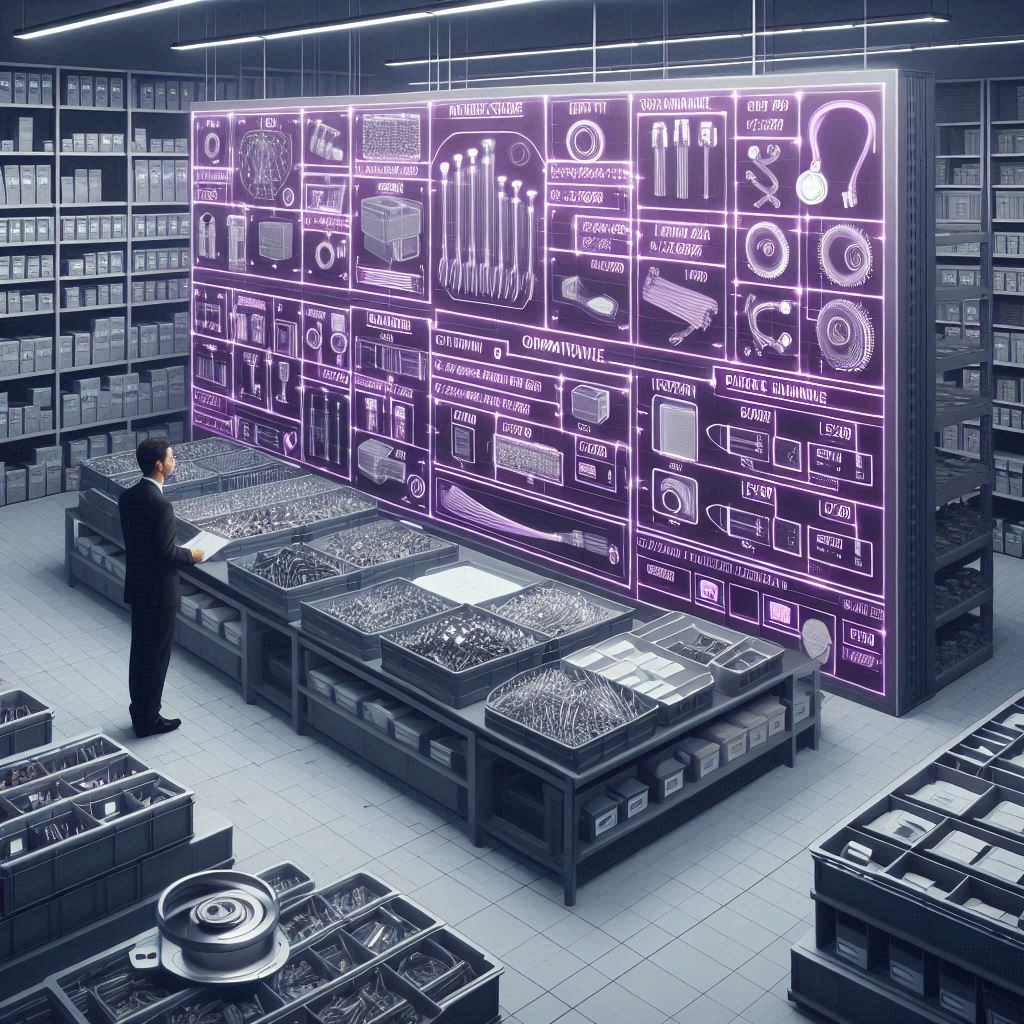
"Can you afford to lose another bid because a single ambiguous part dragged your quote into overtime?"
You feel the squeeze when quotes stretch from days into weeks, when PDFs arrive as puzzles, when sourcing becomes a scavenger hunt and procurement fires off RFIs. Cableteque solves that. By combining an expansive parts library with supplier feeds, AI-driven auto-mapping, and manufacturing-aware rules, Cableteque collapses manual work, cuts sourcing delays, and gets you back to running margin-positive projects. In short, Cableteque's parts library, component sourcing logic, BOM extraction, and auto-mapping of MPNs turn quoting from a gamble into repeatable performance.
Quoting a wire harness assembly feels like a relay race where every handoff is risky. You receive unstructured OEM PDFs, you restore BOMs by hand, you ping several suppliers for prices and lead times, then you wait for an engineer to confirm oddball parts. That sequence kills speed and margins. Recent industry coverage describes how teams compress multi-day quoting into near real-time workflows by connecting design and procurement data streams. See the Wiring Harness News coverage of Cableteque's digital thread integration for context on how this is changing the industry.
You know how much time your team spends recreating BOMs from PDFs. Cableteque's document intelligence extracts parts lines, connectors, wire callouts, and termination details, and turns them into standardized BOM records. In practice, teams report up to 96% reductions in manual input when the automated extraction is tuned to their templates. A task that once took hours now takes minutes, and the result is consistent BOM formatting across quotes.
Example: An EV harness contract manufacturer received five OEM PDFs with inconsistent field names and unit formats. After running the files through Cableteque, the system consolidated 1,200 BOM lines into clean records, flagged 18 ambiguous descriptions, and produced a first-pass cost estimate within 30 minutes. What had been a three-day project became a same-day win opportunity.
You live with local part numbers from OEMs that do not match distributor or manufacturer part numbers. That mismatch forces engineers and buyers to decipher intent. Cableteque's parts library stores mappings from customer part numbers to manufacturer part numbers, and applies approved alternates automatically. The result is fewer RFIs, fewer last-minute substitutions, and more confident quotes.
A practical approach is to prioritize mapping for your top 20 customers and the top 200 SKUs they request. When you map high-volume customer PNs first, you reduce RFI volume and approval cycles because the system applies known equivalences.
Example: A harness containing a customer-specified "SHLD-CON3-BLK" description was auto-mapped to a specific Molex MPN based on historical matches and compatibility rules, eliminating a 24-hour clarification request.
A missing terminal, a seal, or a cavity plug can stop a build. Cableteque applies connector compatibility rules and wire-gauge logic to autopick the right terminal types, seals, and cavity plugs. That reduces engineering interruptions and lowers the risk of incompatible bundle designs.
The parts library includes families of connectors and their compatible terminals. When a connector MPN is present but terminals are not listed, the system suggests a default terminal based on connector cavity size and wire AWG, or auto-fills it when your rules permit autopick.
Example: A contract manufacturer quoting automotive harnesses used autopick to add 1,400 terminals across a set of harness assemblies, shaving hours of manual selection and preventing a build hold later in production.
You cannot price accurately if supplier data is stale. Cableteque integrates with over 20 distributor feeds so pricing and lead times are current while you quote. The parts library is paired with those feeds to compute landed cost and delivery risk in real time, so you do not promise delivery dates that are impossible to meet.
Example: During a supply constraint, the system flagged a common connector with backorders and offered two approved alternates with shorter lead times and minor cost changes. The team updated the quote automatically, preserving margin and schedule.
You have people who know exactly which alternates work, which suppliers ship reliably, and which packaging conversions are acceptable. Cableteque encodes that tribal knowledge as rules, mappings, and preference layers in the parts library. That means knowledge is not lost when someone leaves, and juniors can quote with the confidence of a veteran.
You standardize decisions like whether to source terminals on reels or loose piece, or which seal family is acceptable for a given IP rating. When you store those choices in the parts library, future quotes follow the same standards automatically.
Derrick Lang, with 30 years in wire harness manufacturing, found this to be one of the most valuable aspects of switching to Cableteque. His institutional knowledge about part numbers, alternates, and sourcing preferences is now in the system, not just in his head. Read his full story.
A large parts library is only useful if the software layers make sense of it. Cableteque combines deterministic rule engines with heuristic mapping and AI validation layers. The rule engine enforces manufacturing heuristics, the heuristic mapping finds likely matches for fuzzy descriptions, and AI flags anomalies for human review.
Integration checklist: supplier APIs for pricing and availability, CAD and ECAD connectors for harness topology, and ERP or PLM hooks for BOM sync and order handoff. Together, these integrations ensure data flows from design through procurement and manufacturing with fewer handoffs.
Technical example: When a harness drawing is parsed, topology extraction computes wire lengths, which feed labor-time calculations. The parts library supplies correct protective covering and termination parts, and real-time pricing updates compute an accurate total. Anomalies such as a mismatched wire gauge for a specified terminal are flagged automatically for review.
Use this simple template to estimate ROI for your team:
A contract manufacturer receives multiple PDFs that would normally require rework and supplier outreach. Cableteque consolidates BOMs, autopicks missing parts, and returns a priced quote in 30 minutes instead of 5 to 7 days. That speed lets you submit a same-day response and increases conversion probability.
When a preferred connector shows long lead times, the parts library recommends approved alternates and updates cost and labor estimates immediately. The sourcing team avoids a multi-day search and a potential order delay.
Real customer results back this up. KCM Cable reduced a single complex quote from 18 hours to 45 minutes. Resco Electronics went from 30-day backlogs to 2 to 3 day turnaround during peak season. Read their full stories.
You have a choice: keep losing time to manual BOM recreation and sourcing ping pong, or make quoting a competitive advantage. See how Cableteque works.
How accurate is automated BOM extraction from PDFs?
Automated extraction can be highly accurate for standard-form PDFs, and accuracy improves as you tune templates and add validation rules. Expect to eliminate most manual recreation work, with edge cases flagged for quick review. Teams report reductions in manual input of up to 96% in many implementations. Validate critical fields during the pilot phase.
How does Cableteque handle obsolete or long-lead parts?
The parts library stores approved alternates and sourcing preferences, and real-time supplier integrations flag long-lead items immediately. When a part is obsolete or backordered, the system suggests alternates that meet your approval rules, recalculates cost and schedule impacts, and surfaces those options to procurement or engineering for final sign-off. You can evaluate substitutions within hours instead of days.
Will this integrate with my existing ERP, PLM, or CAD tools?
Yes. Cableteque integrates via APIs and data connectors with common ERPs, PLMs, and CAD and ECAD systems. Integration depth depends on your systems and priorities. Start with the most business-critical flows such as BOM sync and supplier pricing. Secure connectors and audit logs allow you to push approved BOMs into downstream systems with confidence.
How do you protect proprietary customer mappings and supplier contracts?
Enterprise deployments include role-based access control, encryption at rest and in transit, and audit trails. You can lock down customer-specific mappings and supplier preferences so they remain private to your organization while still benefiting from the shared rules and library that speed quoting.
How long does onboarding take for a typical mid-sized contract manufacturer?
A focused pilot can be live in weeks when you prioritize top customers and top SKUs. Expect a multi-week phase for supplier integration and rule tuning, with immediate value from document extraction and mapping updates. The goal is a measurable reduction in quote time within the pilot window.
Will juniors be able to run quotes without constant senior oversight?
Yes, that is a key outcome. The parts library and rules encode the decisions that normally require senior judgment. During rollout you keep senior oversight, but as the parts library grows and rules are validated, juniors can produce accurate, auditable quotes with less supervision.
"Accelerating Wire Harness Design, Quoting, and Manufacturing with Digital Thread Integration." Wiring Harness News, April 2026.
"Beyond Search: Why Wire Harness Quoting Requires Purpose-Built Intelligence." Cableteque Blog.
"WHMA Wire Harness Industry Survey Data." Wire Harness Manufacturers Association.
tes in a matter of weeks. Are you ready to stop letting parts sourcing decide whether you win the job?
Here's why operations managers love Cableteque for faster, error-free wire harness quotes
Increase your quote win rates without manual errors through Cableteque's AI-powered solution
Where does seamless CAD/ECAD integration transform wire harness contract manufacturing quoting?