BOM & Parts Sourcing
How to solve the issues in library management
How to solve the issues in library management
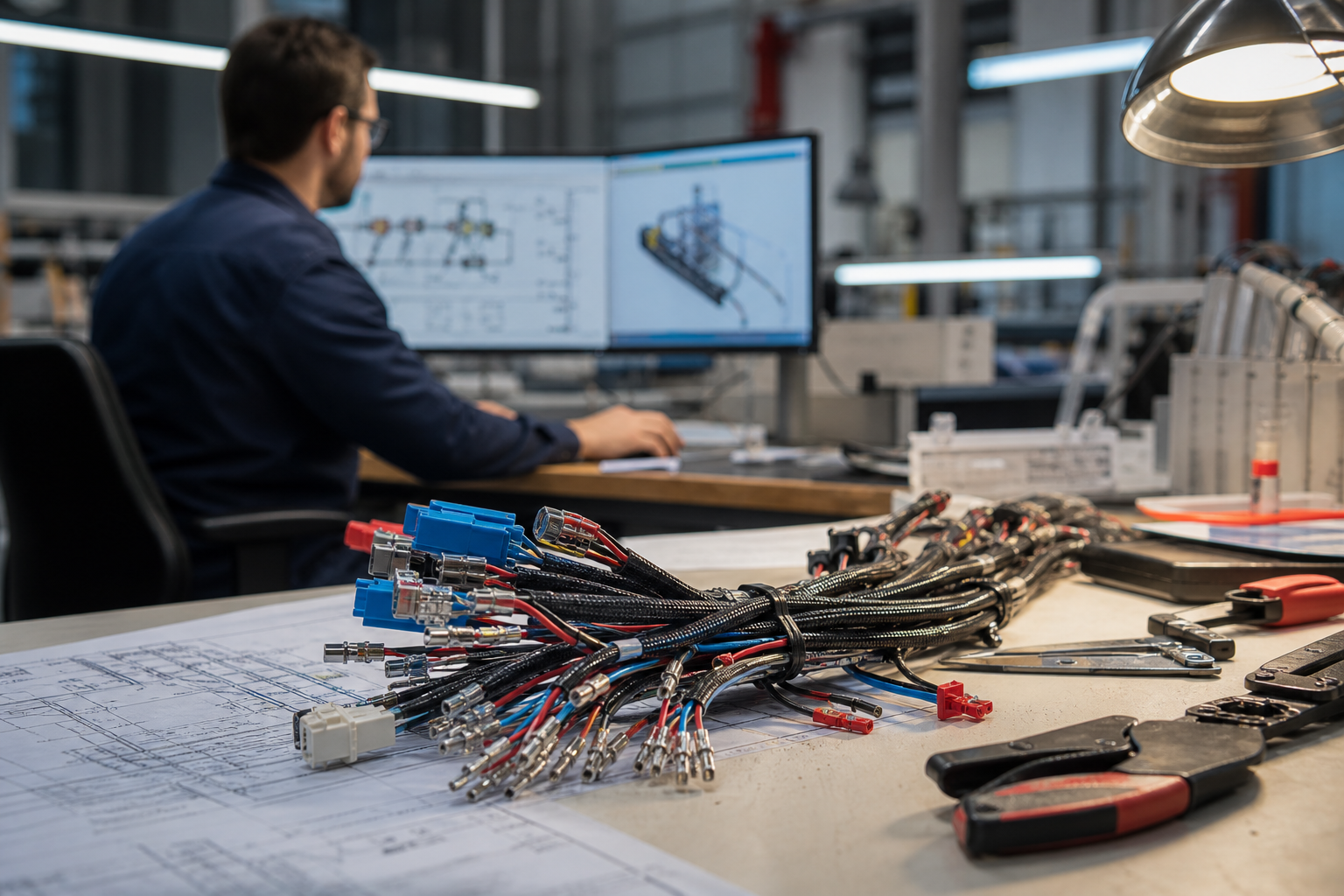
Wire harness quoting is still slow because the work starts with messy inputs. RFQs arrive as PDFs, Excel files, markup sheets, and half-finished BOMs, then someone has to rebuild the package before pricing can even begin. In the WHMA Innovation Advisory Team survey of 42 contract manufacturers, 73.81% described quoting as manual and time-intensive, even though BOM creation scored 4.07 out of 5 for digital maturity. That gap is the whole story.
The best quoting automation tools for North America solve that gap in practical terms. They cut BOM creation time, reduce sourcing delays, and shorten quote turnaround time without forcing a shop to throw out its current workflow. If you are comparing EWH quoting software, this is where the difference shows up: not in the sales demo, but in how fast the quote leaves the building and how often it leaves at the right margin.
For wire harness contract manufacturers, the real question is simple. Which platform can turn a pile of drawing data into a valid, priced, reviewable quote before the customer moves on? The answer is the tool that handles BOM creation, material sourcing automation, labor estimation, and quote finalization in one pass.
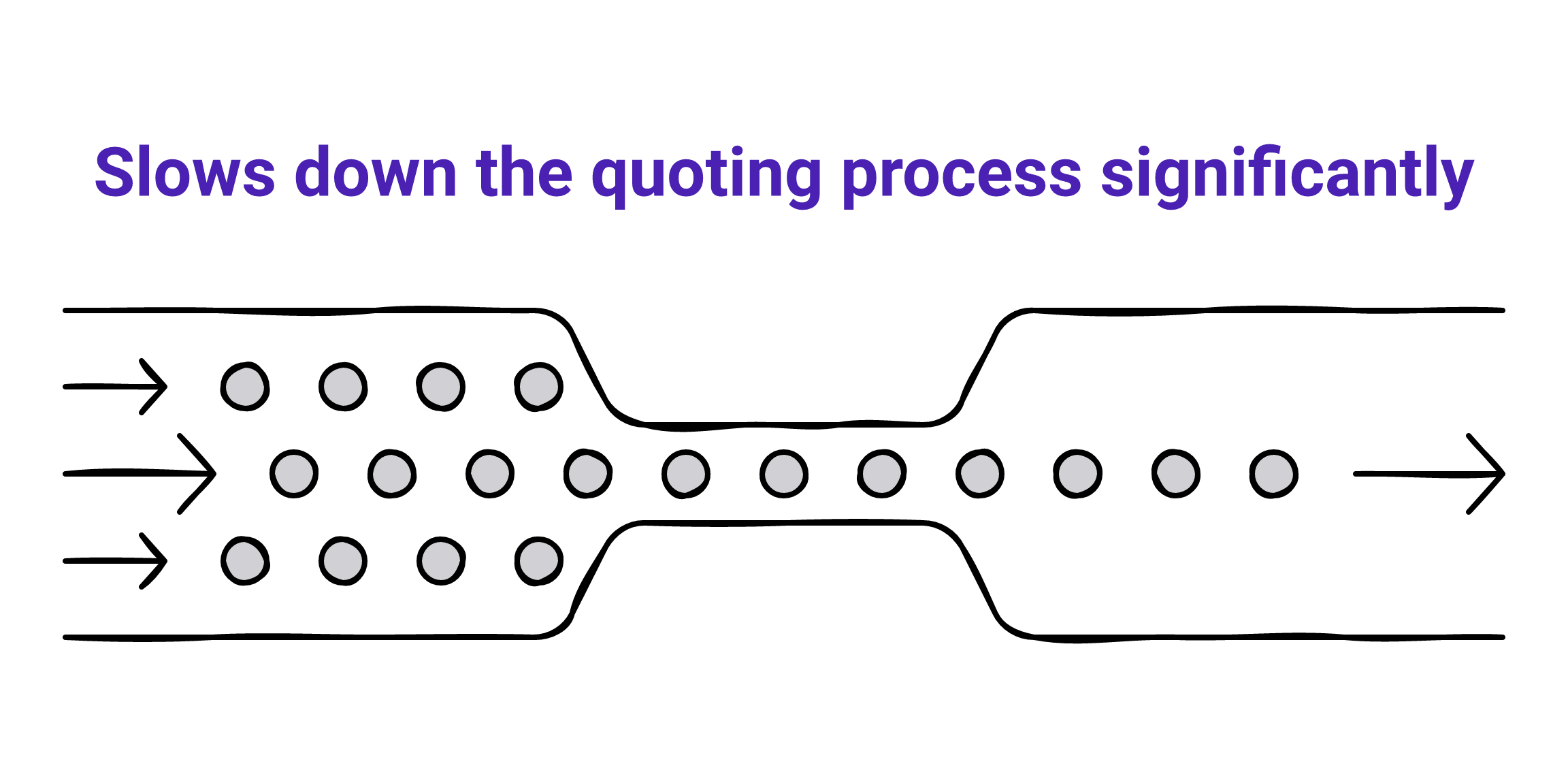
A seven- to ten-day quoting cycle is still common because each quote contains several jobs hidden inside one deadline. Someone has to read the RFQ, rebuild the BOM, verify the wire gauge, check connector compatibility, chase pricing, estimate labor, and get internal sign-off. The WHMA survey found that 57.14% of manufacturers cite BOM or design completeness as a top challenge, and 47.62% still rely on Excel or Word-based methods. That is why quoting stays expensive before a single part is ordered.
The quiet cost is in the handoffs. Manual BOM creation consumes time on every assembly, especially when the drawing uses shorthand like "blk tape," incomplete connector callouts, or inconsistent customer part numbers. Senior estimators end up carrying tribal knowledge in their heads, which creates key-person risk and slows quote finalization whenever they are out, overloaded, or pulled into production problems.
Generic manufacturing software misses the pattern because wire harness work is not a standard catalog exercise. A harness quote may need wire-length tracing, cavity plug selection, alternate part mapping, bundle-diameter checks, and compliance review against IPC/WHMA-A-620 or AS50881H. That is why many shops end up with software that can generate a price, but still leaves the real engineering cleanup to the estimator.
According to Quote Automation, Generic CPQ and manufacturing software often fail to address the unique complexities of wire harness quoting, such as wire-length tracing and connector compatibility. Source
The best tools do not just price parts. They normalize bad input, preserve review control, and support the actual logic of wire harness assemblies. If a platform cannot read OEM PDFs, support multi-assembly RFQs, map part numbers, and calculate wire-specific requirements, it is a sales quoting tool wearing a manufacturing label.
You should also expect current sourcing data. Static catalogs age fast, especially when lead times change by supplier and alternates matter. In the same WHMA survey, 47.62% of manufacturers identified sourcing and materials difficulty as a top challenge, which is why material sourcing automation matters as much as BOM cleanup. A quote built on stale pricing is only fast if you ignore the margin damage it creates.
A good evaluation should include six things:
| Capability | What it should do | Why it matters |
|---|---|---|
| BOM import | Read OEM PDFs, Excel files, and multi-assembly RFQs | Cuts manual recreation and reduces entry errors |
| Wire logic | Handle wire length, connector compatibility, alternates, and part mapping | Supports real wire harness assemblies, not generic assemblies |
| Sourcing | Show current pricing and availability | Protects margin and lead time promises |
| Control | Allow engineer review, overrides, and approval workflows | Keeps tribal knowledge inside the process |
| Collaboration | Work in the cloud with CAD and ECAD links | Supports North American teams working across locations |
The WHMA survey also shows what buyers value most. Automated BOM enhancement scored 4.50 out of 5, assembly instruction generation scored 4.34, and labor and cost estimation scored 4.27. That tells you where the market feels the pain. It also shows why tools built around quoting throughput, not just design storage, are getting the attention.
For teams that want a broader view of evaluation criteria, Cableteque's wire harness quoting software buyer guide for contract manufacturers breaks down the practical gaps in current workflows. If you want a market view of why wire harness demand is getting more complex across EV, aerospace, and medical programs, the 2026 electrical wire harness market trends overview gives useful context.
The market breaks into four useful categories. Full quoting automation platforms are built to handle BOM extraction, sourcing, labor, and quote approval in one place. Parts intelligence tools are useful when your team already has a process but needs faster pricing lookup and availability checks. CAD and harness design tools support the engineering side, yet they usually stop short of quote finalization. Legacy engineering suites can be strong in design, but they often leave quoting speed behind.
That is the practical filter. If a tool does not reduce estimator touch time, it is not really solving wire harness quoting. If it speeds one step and creates more work in the next, the cycle time barely moves. North American manufacturers need lower quote turnaround time, lower rework, and better review control, not another system that adds one more place to reconcile part data.
For many shops, the best fit is a purpose-built platform that goes from document intake to priced quote in the same workflow. A real benchmark is whether it can run alongside your current process while the team tests it on live RFQs. The WHMA survey found that 57.14% of manufacturers worry about compatibility with existing systems, which is why low-risk adoption matters.
One useful reference point is how general quoting software is described in broader sales operations. Salesforce's automated quoting software overview focuses on CPQ controls, approvals, and pricing governance. That is useful for broad sales environments, but wire harness quoting needs deeper BOM logic, connector rules, and labor estimation tied to actual build content.
Cableteque fits because it starts where wire harness quotes actually start, with drawings, PDFs, and incomplete data. Instant Design Import extracts the BOM from OEM PDFs and cuts manual recreation by up to 96%. That single step removes one of the most stubborn delays in the quoting cycle, especially when RFQs arrive in a format nobody wants to rebuild by hand.
The next step is where most teams lose time. AI-powered analysis flags missing details, maps descriptions to MPNs, stores customer part numbers, applies conversion rules, and adds approved alternates. I have seen estimators waste hours translating shorthand and cross-checking part descriptions that should have been normalized once and reused forever. Cableteque does that cleanup inside the quoting flow instead of pushing it to the side.
Then comes sourcing. Real-time supplier integration gives current pricing and availability for thousands of components, while the 2,000,000-plus part database adds engineering context for compatibility decisions. The platform can autopick missing terminals, cavity plugs, and seals from a from-to list, calculate protective covering from bundle diameter logic, and trace drawings to calculate exact wire lengths from the PDF. That is the difference between a quote built from guesswork and one built from actual build requirements.
According to Sales Quote Automation: The Ultimate Guide, Quote automation platforms that integrate real-time supplier data provide up-to-date pricing and availability, reducing margin leakage and improving quote accuracy. Source
Labor estimation and compliance checks sit in the same workflow. The system generates time estimates from historical data, checks design rules against industry standards, and produces a review-ready quote in one platform. According to Cableteque's published customer results, quote turnaround has been reduced by 70%, quoting capacity increased by 5x without new hires, and complex quote work has saved up to 96% of the time in some cases. Those are the kinds of numbers that change how an estimating department runs.
For a closer look at the product side, review Cableteque's end-to-end quoting platform overview. The core point is simple: it was built by people who understand wire harness quoting from the inside, not as a generic feature set stapled onto manufacturing software.
Start with implementation risk. A tool can look impressive in a demo and still fail if it forces a hard cutover, needs months of configuration, or cannot support the way your estimators actually work. The better choice is often the one that can run in parallel, process live RFQs, and prove value before you rip out existing habits.
Next, test the sourcing model. Ask whether the platform supports North American vendor networks, customer-specific contract pricing, approved vendor lists, and alternate part logic. The WHMA survey shows 64.29% of manufacturers cite cost or budget constraints as the main adoption barrier, 57.14% cite system compatibility, and 52.38% cite lack of internal resources. Those numbers point to a clear buying rule: keep rollout light and prove value early.
You should also measure how much of the quote the system can actually complete. If the platform only saves minutes on data entry but still leaves engineering to rebuild the BOM and labor template, the ROI will disappoint. Track cycle time, estimator hours saved, quote accuracy, and win rate. Cableteque's customer outcomes, including 3- to 6-month payback periods and 10% to 30% win-rate loss for every week of delay beyond three days, show why these metrics matter.
Speed changes the economics of quoting. A slow quote is often a lost quote in North American manufacturing because the buyer is comparing multiple contract manufacturers at once, and the first credible response gets more attention. When 83% of manufacturers encounter customer design errors affecting production, the value of better validation is not abstract. It is margin protection.
Faster quoting also changes staffing pressure. If your team can turn more RFQs without hiring another senior estimator, the business can take on more opportunities without stretching the same experts thinner. The WHMA survey found only 9.52% of manufacturers describe their quoting process as highly automated and scalable, so there is still room to move. That makes automation a capacity decision, not just a software purchase.
The strongest platforms do one more thing. They return senior engineers to work that actually needs senior judgment. Instead of spending the day cleaning BOMs, checking connector orientation, and rebuilding labor templates, they can review exceptions and solve the hard cases. That is why the best quoting automation tool is not the one with the most features on paper. It is the one that gets the quote out fast, keeps the margin intact, and leaves your best people free to do better work.
Q: What is the biggest sign that a quoting tool fits wire harness work?
A: It can read messy input and still produce a usable BOM. That means PDF extraction, part mapping, wire-specific logic, and review control are all part of the same workflow. If a platform only handles standard product catalogs, it will miss the realities of wire harness assemblies. The best tools reduce manual cleanup before the quote reaches engineering review.
Q: Why do so many shops still use Excel for quoting?
A: Excel is familiar, flexible, and already in the building. The problem is that it does not manage sourcing updates, customer part mappings, or connector logic well at scale. The WHMA survey found 47.62% of manufacturers still rely on Excel or Word-based methods, which explains why turnaround time stays long. Teams keep using it because replacing tribal knowledge feels risky.
Q: Should I choose a platform that changes our full process at once?
A: Usually no. Parallel rollout is safer because it lets your team compare output against the current method before you commit. That matters in North American contract manufacturing, where customer deadlines and approved vendor lists are already tight. A platform that can run beside current quoting gives you proof without operational shock.
Q: Do real-time pricing and availability really affect quote quality?
A: Yes, because stale data creates margin leakage. If a quote is built from old pricing, the estimator may win the job at the wrong price or lose it later during correction. Real-time sourcing also reduces back-and-forth with suppliers, which shortens quote turnaround time. In a market where lead times change quickly, current data is part of quote accuracy.
Q: What ROI should I look for first?
A: Start with time saved per quote, then look at quoting capacity and win rate. The WHMA survey shows labor and cost estimation is one of the most desired automation areas, and that lines up with what estimating teams feel every day. If the platform cuts manual BOM recreation, sourcing delay, and quote finalization, the payback usually shows up fast. A short quote cycle is often easier to monetize than a general software efficiency claim.
If your team is still spending days on BOM cleanup, sourcing, and review, the software gap is already costing margin. The right platform should remove manual work without forcing you to abandon the process you trust. Cableteque was built for that exact job, and it reduces a 7-10 day quoting process to 30 minutes.
Cableteque combines over three decades of hands-on industry expertise with a commitment to innovation in wire harness software. Founded by Arik Vrobel, our team brings together engineers, operators, and business leaders who deeply understand the challenges related to wire harnesses.
We focus on solving the toughest problems across the entire design-through-manufacturing lifecycle, helping teams work smarter, faster, and with greater precision.
Our company thrives on innovation, inclusivity, and collaboration. We value individuality, sustainability, and making a positive impact-building trust and shared success every step of the way. We are the only company creating software designed by wire harness people, for wire harness people. Our goal is to simplify communication between OEMs and contract manufacturers, streamline operations, and help businesses grow.
Cableteque isn't just a tool; it's an evolving platform built to empower engineers, supply chain specialists, sales teams, and manufacturing professionals to do their best work. Our company thrives on innovation, inclusivity, and collaboration.
How to solve the issues in library management
New components causing chaos in your wire harness quotes?
Discover why specialized wire harness quoting software outperforms generic manufacturing tools, streamlining BOM extraction and enhancing quote...