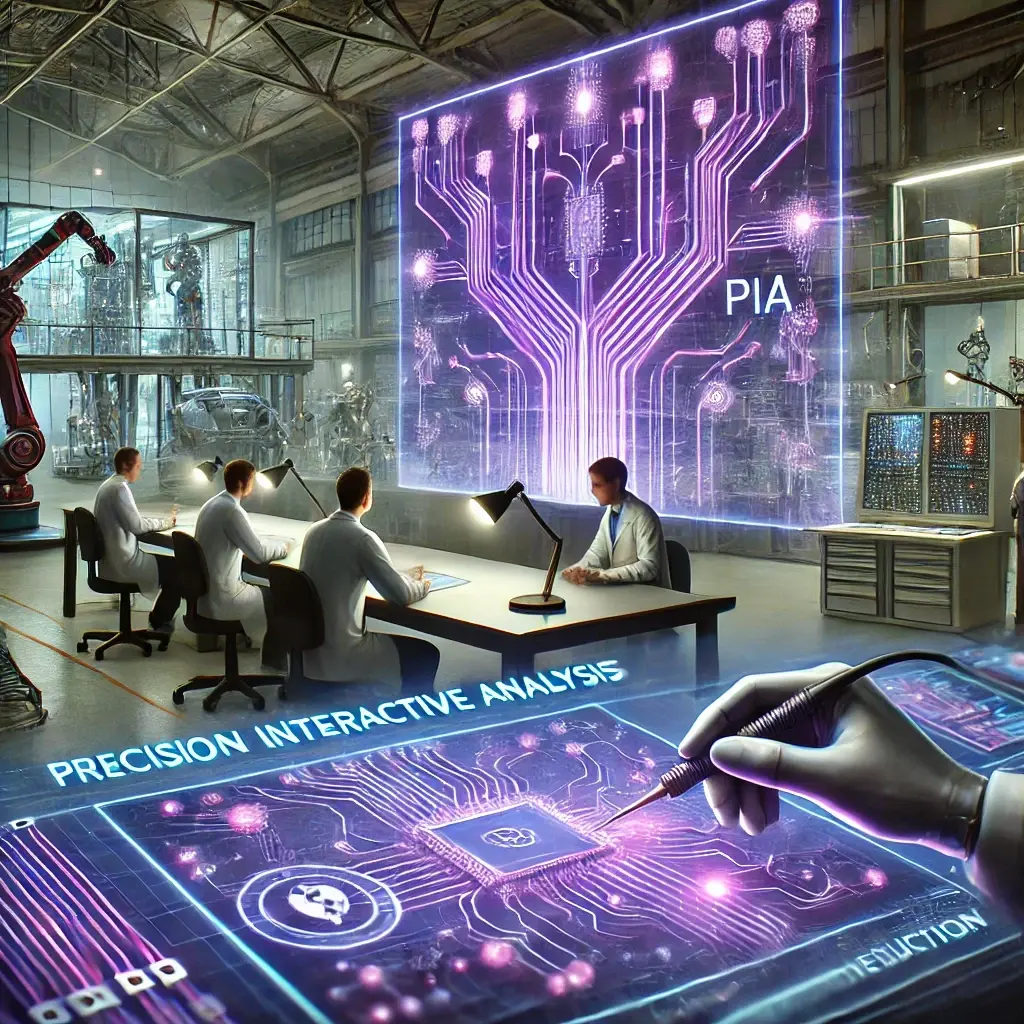
In wire harness design, a single error in the design rule check can ground a fleet, fail a safety audit, or send a production run back to the drawing board. Engineers take precision seriously because the consequences of getting it wrong are serious.
The same logic applies to quoting, and most shops have not caught up to it yet.
A quoting error is not just a pricing miss. A mis-typed part number becomes a scrap order. A wrong terminal selection creates a build hold. An obsolete connector spec costs you a post-award negotiation. The errors that slip through manual quoting do not announce themselves until they are expensive to fix. The question is whether you catch them at the quote stage, when they cost nothing to correct, or at the production stage, when they cost you margin, time, and customer confidence.
This is where Cableteque's AI-powered quoting platform makes a measurable difference.
Why quoting errors are so common in wire harness manufacturing
Wire harnesses are not simple assemblies. A single harness can contain dozens of connector types, multiple wire gauges, custom terminal configurations, protective coverings, splices, and customer-specific callouts that require interpretation. When an estimator rebuilds that assembly from a PDF by hand, every line is a potential error.
The WHMA survey shows 57% of manufacturers cite BOM completeness as one of their top operational challenges. That number makes sense when you consider that most customer drawings are incomplete. Missing cavity plugs, unspecified backshells, unclear tape callouts, ambiguous part number formats: these gaps have to be filled by the estimator, and they are filled differently depending on who is doing the quote.
The result is inconsistency. Two estimators looking at the same drawing produce different BOMs. Different BOMs produce different costs. Different costs produce different win rates and different margin outcomes. For an industry that runs on precision at the assembly level, the quoting process is often surprisingly imprecise.
What AI-powered precision looks like in practice
Cableteque's AI applies the same systematic validation logic to quoting that design rule checks apply to engineering drawings. Rather than checking wire gauges against connector cavity sizes in a CAD environment, it checks BOM completeness against a 10 million plus component library, flags missing terminals and seals, and validates connector compatibility before the quote goes out the door.
Here is what that looks like at each stage of the quoting process:
BOM extraction and validation
Cableteque reads customer drawings in any format, PDF, TIFF, Excel, CSV, Zuken, Capital, and extracts every part number, wire gauge, connector, and quantity automatically. The AI flags low-confidence extractions for human review rather than guessing. It also flags items that are implied but not shown on the drawing, cavity plugs, backshells, heat shrink, ties, labels, the components an experienced estimator knows to add and a junior one misses.
Teams using Cableteque report up to 96% fewer manual BOM edits. That is not just a time saving. That is a precision improvement at the most error-prone stage of the quoting process.
Part mapping and compatibility checks
Customer part numbers rarely match distributor or manufacturer part numbers directly. Cableteque's parts library stores mappings from customer PNs to MPNs and applies approved alternates automatically. When a connector MPN is present but terminals are not specified, the system suggests the correct terminal based on connector cavity size and wire AWG. These are exactly the kinds of compatibility checks that separate accurate quotes from ones that create problems in production.
Real-time sourcing validation
A quote built on stale pricing data is a precision failure waiting to happen. Cableteque connects to over 20 distributors via live API, pulling your negotiated contract pricing and current availability at the time of the quote. If a part is backordered, the system flags it and suggests approved alternates rather than letting the issue surface after the customer has placed the order.
Labor estimation from drawing data
Cableteque reads the drawing and counts operations: crimps, splices, cuts, routing steps, protective covering applications. It auto-populates labor templates with your company's time standards, removing the estimator-to-estimator variability that makes labor estimates unreliable. The result is a labor cost that reflects what the job actually requires, not what someone remembered from a similar job last month.
The downstream effect of quoting precision
When your quote is accurate, the job you win is a job you can build at the price you quoted. That sounds obvious but in practice it is not the norm. Post-award surprises, cost overruns, and margin erosion on won jobs are symptoms of quoting imprecision. Every dollar of rework traced back to a quoting error is a dollar that should have stayed in your margin.
Kory Ewell at KCM Cable reduced a single complex quote from 18 hours to 45 minutes after switching to Cableteque, and found that pricing accuracy improved at the same time. His words: "I feel more confident in the pricing because I can see the exact number. Customers have told us our pricing is more competitive." Precision and speed together, not a trade-off between them. Read the full KCM Cable story.
Kelly Grato at Resco Electronics eliminated 30-day quote backlogs and brought turnaround to 2 to 3 days. The accuracy improvement meant fewer post-award conversations about cost changes. Read the full Resco story.
Precision as a competitive advantage
In wire harness manufacturing, precision has always been a selling point at the assembly level. Shops compete on their ability to build to spec, meet tolerances, and deliver reliable harnesses. That same standard of precision should apply to the quoting process.
The shops that bring AI-level precision to quoting are winning on two fronts. They are faster because they are not spending days on manual BOM recreation and supplier outreach. And they are more accurate because AI does not misread a part number, forget to add a cavity plug, or use last month's pricing. That combination is hard to compete against once a shop has it working.
Precision in quoting is not just about avoiding errors. It is about building the kind of reputation where customers trust your numbers and come back. See how Cableteque delivers quoting precision for wire harness manufacturers.
FAQ
How does Cableteque catch errors that a manual quoting process would miss?
Cableteque validates BOM completeness against a 10 million plus component library, flags missing components that are implied but not shown on the drawing, checks connector and terminal compatibility, and surfaces parts with availability or obsolescence issues before the quote is finalized. These checks happen automatically at every stage of the quoting process.
What happens when Cableteque is not confident about an extraction?
Low-confidence extractions are flagged for human review rather than auto-filled. The system tells you what it found and why it is uncertain, so your estimator can make an informed decision. This is more reliable than a system that guesses and more efficient than manual recreation from scratch.
How does Cableteque handle connector compatibility checking?
The parts library includes connector families and their compatible terminals. When a connector MPN is present but terminals are not specified in the drawing, Cableteque suggests the correct terminal type based on connector cavity size and wire AWG. If your rules permit autopick, it can fill these automatically. If not, it surfaces the recommendation for estimator review.
Does precision quoting require more time than manual quoting?
No. Cableteque reduces BOM extraction from 30 to 45 minutes to under 2 minutes, sourcing from 3 to 7 days to minutes, and labor estimation from 30 minutes to 2 hours down to 5 minutes. The precision comes from the system's validation logic running automatically in the background, not from additional manual review steps.
How does quoting precision affect margin?
Every quoting error that reaches production costs money to fix. Missing components require expedited purchasing. Wrong terminal selections require rework or assembly holds. Obsolete parts require last-minute substitutions that often carry a cost premium. Eliminating these errors at the quoting stage protects the margin on every job you win.
References
"WHMA Wire Harness Industry Survey Data." Wire Harness Manufacturers Association.
"Accelerating Wire Harness Design, Quoting, and Manufacturing with Digital Thread Integration." Wiring Harness News, April 2026.
"IPC/WHMA-A-620F-2025: Requirements and Acceptance for Cable and Wire Harness Assemblies." ANSI Blog, January 2026.
"Wire Harness Failure Analysis: 7 Common Causes and How to Prevent Them." Wire Harness Production, March 2026.
A into their workflow with minimal initial hurdles.