Key Takeaways
- Cableteque Quote does extract BOMs automatically from customer PDF drawings, and the company says it can cut manual BOM recreation time by up to 96%.
- A quote package that used to sit in an estimator's queue for 30 to 45 minutes per assembly can drop to about 2 minutes when the PDF-to-BOM workflow is working as designed.
- The real value is not just speed. Automatic BOM extraction reduces hand-entry errors, catches missing information earlier, and gives engineering and operations teams a cleaner base for sourcing and labor estimates.
- The feature matters most in wire harness quoting, where 73.81% of manufacturers in Cableteque's WHMA survey described quoting as manual and time-intensive.
- If your team still rebuilds BOMs from OEM PDFs by hand, the workflow is already costing you quote speed, estimator capacity, and margin.
Introduction
Yes. Cableteque Quote is built to automatically extract BOMs from customer PDF drawings, then carry that structure into pricing, sourcing, and quote generation. The platform's own materials say it can automatically extract the BOM out of OEM PDFs and that it accepts drawing formats including PDF, TIFF, Excel, and XML through its wire harness quoting software.
That matters because PDF-to-BOM work is one of the slowest parts of wire harness quoting. In Cableteque's own materials, manual recreation of a BOM from a drawing takes 30 to 45 minutes per assembly, and more than 2 hours when there is no BOM table on the print. When quoting teams are juggling multiple RFQs at once, those minutes turn into missed response windows and uneven margins.
The question is not whether the automation exists. The real question is how the workflow works, what it removes from the process, and what a manufacturing team gains when it replaces hand transcription with automatic extraction. The steps below break that down in the order a quoting team can use it.
Table of Contents
- Step 1: Capture the drawing package
- Step 2: Extract the BOM from the PDF
- Step 3: Normalize part data and part numbers
- Step 4: Check design gaps and sourcing logic
- Step 5: Build labor and cost inputs
- Step 6: Review, approve, and send the quote
- What the workflow changes for estimators and managers
- FAQ
- About Cableteque
Step 1: Capture The Drawing Package
The first job is to get the customer drawing into the system in a form it can read and parse. Cableteque says its platform accepts PDF and other common file types, which lets quoting teams start from the documents OEMs already send instead of rebuilding the package elsewhere first.
This step matters because bad intake creates bad output. If the drawing is incomplete, unreadable, or split across multiple files, the estimator spends time chasing data instead of pricing the job. A clean upload is the point where the clock starts and where the rest of the workflow becomes measurable.
- Upload the customer PDF drawing, BOM sheet, and any supporting notes as a single quote package so the system has the full context before extraction begins.
- Verify that the file set includes the latest revision, because the value of automatic extraction drops fast if the team starts from an old print.
- Confirm the package is ready when the drawing preview opens cleanly and the project file is available for extraction and review.
Step 2: Extract The BOM From The PDF
This is the step that answers the core question directly. Cableteque says it can automatically extract BOM items, descriptions, and customer part numbers from OEM PDFs, turning a manual recreation task into a machine-assisted import.
The company also claims this shrinks BOM recreation time from 30 to 45 minutes down to about 2 minutes, with up to 96% time savings on rebuilding BOMs from customer drawings and PDFs. In a quoting department that handles dozens of RFQs each week, that difference changes how many jobs get touched before the deadline. Cableteque's own blog post, Spent Years Extracting BOMs by Hand. Then We Built a Better Way., describes the same workflow in plain language.
- Start the BOM extraction after the file preview loads so the system can read tables, part callouts, and text blocks from the drawing itself.
- Check the extracted line items against the source PDF to confirm the system has captured the right descriptions, customer part numbers, and quantities.
- Mark this step complete when the BOM is visible in structured form and no major line items remain trapped in the source drawing.
Step 3: Normalize Part Data And Customer Part Numbers
Once the BOM is extracted, the next task is to turn messy customer language into usable manufacturing data. Cableteque says it can map descriptive inputs such as "blk tape" to black Tesa 3/4 inch tape, apply conversion rules like loose piece terminal to reel, and store customer part numbers while mapping them to MPNs.
That is where a lot of quoting teams lose time. A part description from an OEM print often does not match the supplier catalog, and one estimator may know the cross-reference from memory while another has to hunt for it. Cableteque's own materials say the platform applies that tribal knowledge consistently, which cuts rework and keeps the BOM in one naming system.
- Review each extracted line for customer shorthand, internal aliases, and part conversion rules so the platform can resolve them to a standard component record.
- Add approved alternates and equivalency rules where your team already has sourcing preferences, because those choices affect both price and lead time.
- Finish this step when each critical item has a normalized description, customer part number, and mapped MPN or approved alternate.
Step 4: Check Design Gaps And Sourcing Logic
The BOM is only useful if the design can actually be built. Cableteque says its AI-powered analysis flags missing information or errors early, and its sourcing logic can autopick missing terminals, cavity plugs, and seals from connector compatibility and wire gauge data.
That is a major shift from the old process, where an estimator often discovers the gap after hours of manual comparison. In Cableteque's WHMA survey of 42 manufacturers, 57.14% said BOM or design completeness was a top challenge, and 73.81% described quoting as manual and time-intensive. Those numbers explain why early validation pays off so quickly.
- Run the design check after normalization so the software can compare the extracted BOM against connector rules, wire gauge, and missing accessory logic.
- Review any flagged gaps before moving to pricing, since missing seals, cavity plugs, or terminals can distort both cost and feasibility.
- Close this step when the BOM has no unresolved design gaps that would block sourcing or labor estimation.
Why the sourcing pass matters
This step keeps the quote tied to real parts, not guesswork, and it reduces the back-and-forth that usually eats an entire day.
- Cableteque says its parts database includes more than 2,000,000 components, which gives sourcing a broader starting point than a spreadsheet search.
- The platform also claims real-time integration with supplier databases, so availability and price can update during the quote instead of after it.
- The result is a cleaner handoff to labor and margin review, with fewer surprises at approval time.
Step 5: Build Labor And Cost Inputs
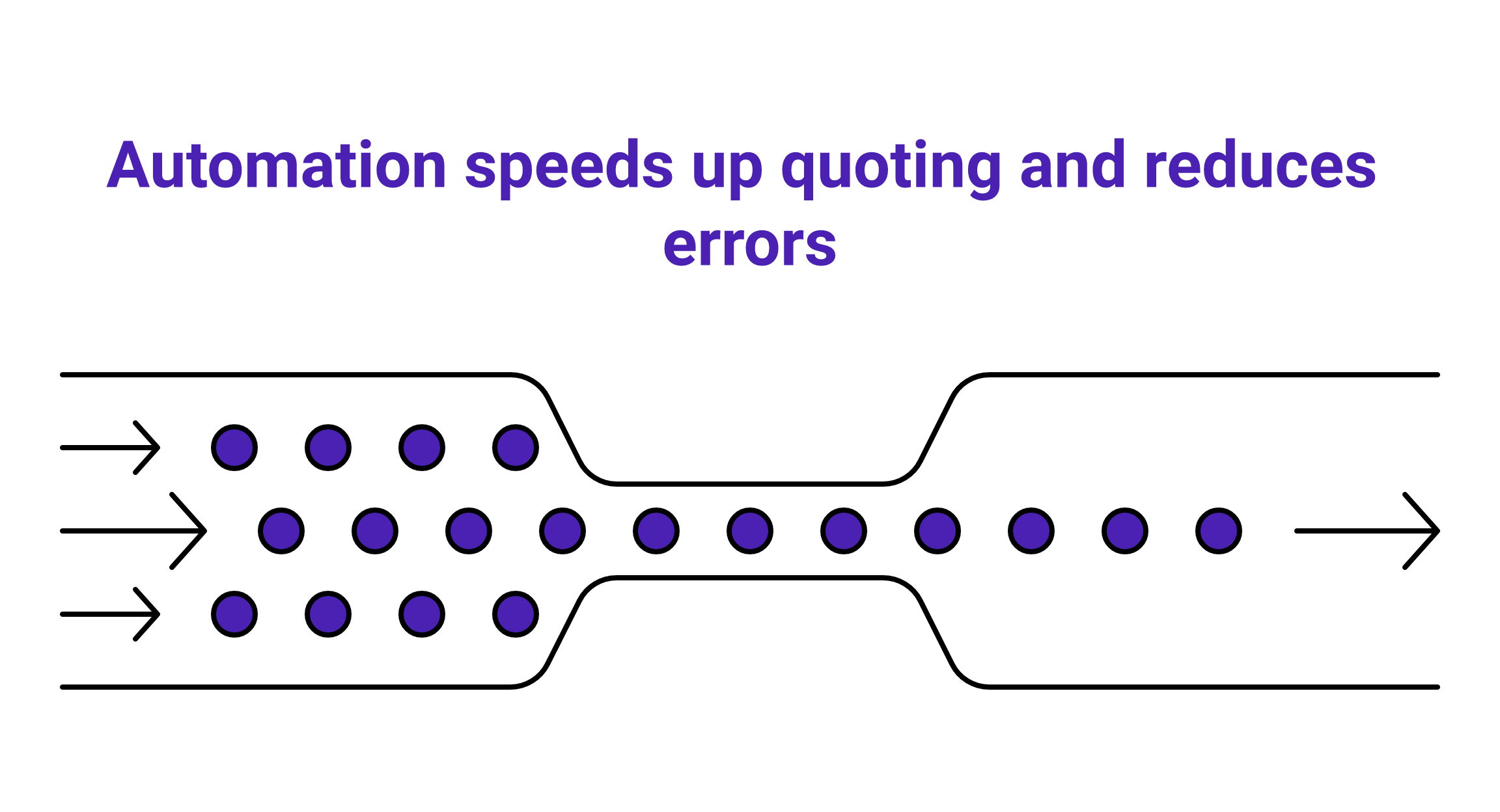
Now the team can estimate labor with the BOM already cleaned up. Cableteque says it generates time estimates from historical data and applies dynamic cost calculation using real-time inputs, which means the quote reflects both material and labor in one pass.
The practical payoff is speed and consistency. The company says the larger quoting cycle can shrink from 7 to 10 days to about 30 minutes in many pilots, and its broader performance claims include reduced manual input by up to 96%. Cableteque also says the platform reduces the need for deep manual engineering intervention on every quote, which frees senior staff for the jobs that actually need their judgment.
- Load the extracted BOM into the labor estimation workflow so the software can assign task counts and estimated time by operation.
- Check the material pricing against supplier data and your approved source preferences before applying overhead and margin.
- Confirm the estimate is complete when labor, material, and quote totals are all visible in the same review view.
Step 6: Review, Approve, And Send The Quote
The final step is internal review, where the platform turns structured BOM data into a customer-ready quote. Cableteque says one-click reviews and approval help teams move quickly, while compliance checks and crosslist validation catch incorrect part numbers on the first pass.
This is the point where slow quoting turns into lost business. When a competitor replies in a day and your team replies in a week, the customer often stops waiting. Cableteque's own content on reducing quoting errors and delays frames that delay as a margin problem, not just an efficiency problem.
- Review the quote package for part accuracy, labor assumptions, supplier availability, and any open compliance flags before final sign-off.
- Send the approved quote in the customer's required format so the response goes out without extra rework.
- Treat the step as complete only when the quote is approved internally and ready for customer delivery.
What The Workflow Changes For Estimators And Managers
Automatic BOM extraction changes the shape of quoting work. Instead of spending the first half of the day rebuilding a BOM from a PDF, the team spends more time checking exceptions, validating labor, and deciding where the job actually belongs in the queue.
That shift matters for product managers, engineering managers, and operations managers because it changes capacity without adding headcount. Cableteque says one outcome is a quote turnaround drop from 7 to 10 days to about 30 minutes, which is a large enough gap to affect win rate, estimator workload, and customer response time at the same time. The workflow is also non-disruptive, which means teams can add it without rebuilding every existing process on day one.
The quoting department becomes less reactive. Senior engineers spend less time on manual data entry and more time on the jobs that need engineering judgment, while operations gets a cleaner path from RFQ to approval.
A Faster Quoting Motion Starts Here
If your team still rebuilds BOMs from customer PDFs by hand, Cableteque Quote gives you a direct way out of that bottleneck. The company says the system extracts BOMs automatically, maps part data, flags missing information, and reduces the quote cycle from days to minutes. That is not a small efficiency gain. It is the difference between catching an RFQ while the customer is still comparing options and replying after the decision has already moved on.
I have seen good teams lose work because the quote sat too long in someone's inbox. You do not need more hand entry to solve that. You need a workflow that reads the drawing, builds the BOM, and moves the quote forward with less manual drag. If you want to see the full workflow in action, review the wire harness quoting software and decide whether your current process can afford another week of delay.
FAQ
Q: Does Cableteque Quote automatically extract BOMs from customer PDF drawings?
A: Yes. Cableteque says the platform automatically extracts BOM items, descriptions, and customer part numbers from OEM PDFs. It is built to reduce manual recreation work and move the quote forward faster. The company's stated goal is to turn a 7 to 10 day process into about 30 minutes in many cases. That makes the PDF-to-BOM step one of the main reasons teams adopt the software.
Q: How much time does the PDF-to-BOM step save?
A: Cableteque claims the BOM recreation step drops from 30 to 45 minutes to about 2 minutes. In other materials, it says rebuilding BOMs from customer drawings can save up to 96% of the time. Those figures come from the company's own product and blog content, so they should be read as vendor claims rather than third-party validation. Even so, the size of the time reduction is consistent across multiple pages.
Q: What happens if the drawing is missing part information?
A: The platform is designed to flag missing information and errors early in the process. That gives the estimator a chance to correct the record before sourcing and labor estimates get built on a weak BOM. Cableteque also says it can apply conversion rules, map customer part numbers to MPNs, and add alternates where sourcing knowledge already exists. That combination reduces the amount of manual cleanup needed after extraction.
Q: Why does automatic BOM extraction matter so much in wire harness quoting?
A: Because quoting is still slow in most shops. In Cableteque's WHMA survey of 42 manufacturers, 73.81% described quoting as manual and time-intensive, and 57.14% said BOM or design completeness was a top challenge. That lines up with what estimators see every day, which is time lost to retyping, checking, and chasing missing data. Automatic extraction removes one of the biggest early bottlenecks.
Q: Can the platform handle more than just the BOM line items?
A: Yes. Cableteque says the workflow also supports sourcing, labor estimation, compliance checks, and quote generation. That matters because a BOM by itself is not a quote. The value comes from turning the extracted data into material cost, labor, margin, and approval in the same process. That is what lets a team move faster without giving up control.
About Cableteque
Cableteque combines over three decades of hands-on industry expertise with a commitment to innovation in wire harness software. Founded by Arik Vrobel, our team brings together engineers, operators, and business leaders who deeply understand the challenges related to wire harnesses.
We focus on solving the toughest problems across the entire design-through-manufacturing lifecycle, helping teams work smarter, faster, and with greater precision.
Our company thrives on innovation, inclusivity, and collaboration. We value individuality, sustainability, and making a positive impact-building trust and shared success every step of the way. We are the only company creating software designed by wire harness people, for wire harness people. Our goal is to simplify communication between OEMs and contract manufacturers, streamline operations, and help businesses grow.
Cableteque isn't just a tool; it's an evolving platform built to empower engineers, supply chain specialists, sales teams, and manufacturing professionals to do their best work. Our company thrives on innovation, inclusivity, and collaboration.
1-1.png?width=190&height=34&name=logo-transparent%20(1)1-1.png)